Seeking a living kidney donor • Gardiner, Maine

Help Kylie get back to a full life of education, athletics, and inspiring the kids in her classroom.

Kylie Boardman is a 20‑year‑old Central Maine Community College student‑athlete living with kidney failure. A living donor kidney can offer the best chance for a healthy, active future. If you’re curious about donation, you can start with a confidential donor screening through Maine Medical Center — even if you don’t match, you may still be able to help through paired exchange.

Prefer to talk to someone first? Contact Kylie’s support team: Bill Boardman at wcboardman@gmail.com or 207‑592‑7776Jennifer Boardman at jboardman@twc.com or 207‑592‑3073. For donor screening questions, call the MaineHealth Transplant Program donor team at 207‑662‑7180.

Her story

Meet Kylie

Kylie Boardman is a 20‑year‑old student at Central Maine Community College and a member of the Women’s Ice Hockey team. She was also a three‑sport athlete at Gardiner Area High School. She has her Associate in Applied Science Degree in Early Childhood Education, is working toward her Bachelor’s Degree in Education, and currently works as a preschool classroom teacher.

Kylie’s kidney journey began prenatally with a diagnosis of no kidney development and no chance of survival outside of the womb. Subsequent testing revealed some development, but she was given less than a 1% chance of survival at birth.

At birth, with a team of a dozen specialized doctors and nurses, Kylie appeared to be a normal, healthy little girl. After testing and imaging, it was discovered Kylie had Solitary Dysplastic Kidney disease — meaning she had only one kidney that would never function to full capacity.

With expert care from the Maine Medical Center nephrology team, and her fighting spirit, Kylie grew up as a normal kid and three‑sport athlete — all while knowing one day her life would change as her kidney function would decrease and a transplant would be needed to live a full life.

Right now, Kylie is facing kidney failure and working toward a transplant so she can keep building her future — in the classroom, with her teammates, and in the community that has always had her back.

If you’re reading this, thank you. Even simply sharing this page helps Kylie’s story reach someone who might be able to take the next step.

Why a living donor matters

A living donor kidney can offer the best chance for a healthy, active future — and it may happen sooner than waiting for a deceased donor kidney. Donation is always confidential and voluntary, and the donor team’s priority is the donor’s safety.

  • Better timing: A living donor transplant can often be scheduled sooner.
  • Strong outcomes: Living donor kidneys often function very well for many years.
  • Paired exchange: If you’re not a match, you may still be able to help through a swap program.
What is living kidney donation?

The basics

A healthy person can live a full life with one kidney. Living donation involves a thorough medical evaluation to protect the donor’s safety. The transplant center’s donor advocates and clinicians ensure donors are informed, supported, and never pressured.

Donation can be direct (to Kylie) or through a paired exchange chain.

Could I be eligible?

Eligibility varies by center. The screening process is the best way to find out. In general, donor teams look at overall health, kidney function, and safety.

  • Adults in good general health
  • Non-smokers or willing to stop (center-dependent)
  • No uncontrolled high blood pressure, diabetes, or serious kidney disease
  • Healthy body weight range (varies by program)

This list is general info — the donor team will provide the official criteria.

How to become a donor

1

Start the confidential screening

Submit a quick form through Maine Medical Center. This goes to the donor team — not to Kylie — unless you choose to share.

Open screening link →

2

Talk with the donor team

They’ll review your health history, answer questions, and explain next steps, testing, time off, and protections.

3

Evaluation & decision

If you proceed, you’ll complete labs and imaging. You can pause or stop at any time — for any reason.

Paired exchange (still help even if you don’t match)

If you want to donate but aren’t compatible with Kylie, the transplant center may offer paired exchange. Your donation can help someone else, and their donor can help Kylie.

Other meaningful ways to help

  • Share this page with friends, teammates, alumni groups, and community organizations
  • Host a low-pressure info night with a transplant educator or living donor speaker
  • Offer rides, meals, or support during appointments and recovery

Fundraising

Why fundraising matters

Transplant is life‑saving — but it can also bring significant out‑of‑pocket costs for families, even with insurance. Fundraising can help cover gaps such as travel, lodging, time away from work, medication co‑pays, follow‑up appointments, and other practical needs before and after surgery.

Fundraiser coming soon. We’ll post the official link here as soon as it’s live.

Estimated cost overview

Costs vary widely by patient, hospital, insurance coverage, and complications. The numbers below are general estimates provided for context.

  • Total billed charges (2025 estimate): roughly $446,800+, including pre‑transplant screening, the procedure, and post‑operative care.
  • Initial hospitalization: the surgery and hospital stay are usually the largest expense.
  • Immuno‑suppressants: post‑transplant medication can range from $25,000–$30,000 per year.
  • Pre‑transplant services: approximately $30,000–$35,000 for evaluations.

Even though the initial surgery is high‑cost, transplant is often more cost‑effective than long‑term dialysis. Please contact the transplant center for the most accurate information for your situation.

Frequently asked questions

Will Kylie know I applied?

Not unless you choose to tell her. The donor team keeps your information confidential and will guide you on what can be shared.

Does donation cost the donor money?

The recipient’s insurance typically covers the donor evaluation and surgery, but donors can have other costs (travel, lodging, lost wages). Ask the donor team about assistance programs and protections available through your center and state/federal resources.

How long is recovery?

Recovery varies by person and by surgical approach. The donor team will explain typical timelines for returning to work, exercise, and sports.

What if I’m not a match?

You may still be able to donate through paired exchange (a swap program). The donor team will explain options based on compatibility testing.

Can I change my mind?

Yes — at any time. Donation is voluntary. Donor advocates are there to support you and protect your autonomy and privacy.

Contact

Message Kylie’s support team

Use this form to reach Kylie’s support contacts (not the donor medical team): Bill Boardman207‑592‑7776wcboardman@gmail.com
Jennifer Boardman207‑592‑3073jboardman@twc.com
For medical screening, use the transplant center link above.

If clicking “Send” opens your email app, that’s normal for this simple form.

Confidential donor screening

If you want to explore living donation, start here:

Maine Medical Center donor screening

MaineHealth Transplant Program – Portland
43 Baxter Blvd.
Portland, ME 04101
Phone: 207‑662‑7180
Fax: 207‑662‑7190

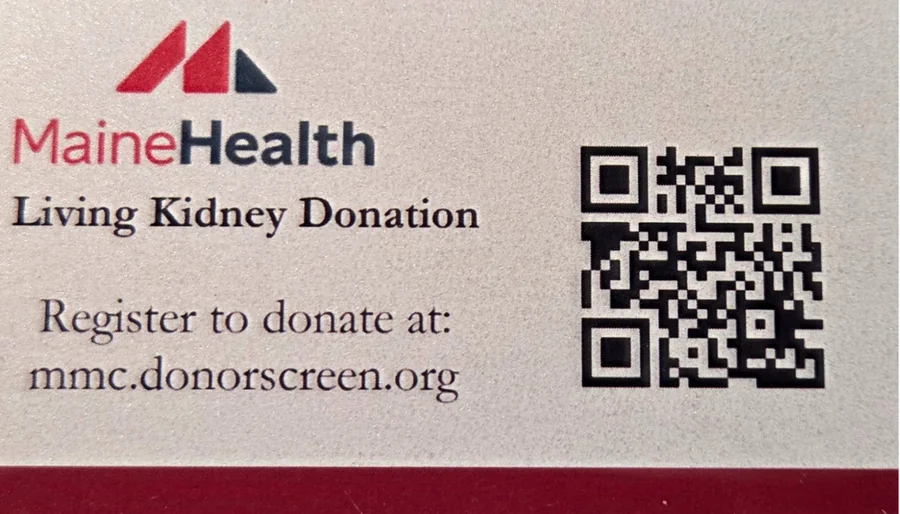
MaineHealth Living Kidney Donation QR code card
Scan to register: mmc.donorscreen.org
Medical questions: Please direct medical and eligibility questions to the transplant center donor team.